
Indian Navy's carrier battle group, submarines and aviation assets were immediately deployed at sea with full combat readiness in the aftermath of the Pahalgam terror attack, a top Navy official said on Sunday.
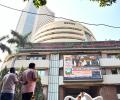
'BSE has facilitated nearly Rs 35 trillion in capital raising across multiple segments.'

'The universe of PSU stocks is huge and diverse.' 'Investors should bet on specific sectors and stocks from the basket as most of them may continue to consolidate after years of outperformance.'
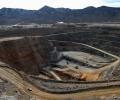
Following the disruption in the supply of rare earth or permanent magnets after China's notification on April 4, the mines ministry is planning to introduce a Rs 1,500 crore incentive scheme to recycle critical minerals, according to a top official.

India's crude oil imports from Russia fell for a second straight month in January to its lowest in 12 months but the nation's insatiable appetite for Russian crude remains for the long term, according to data from energy cargo tracker and industry officials. Russia supplied 1.2 million barrels per day of crude oil to India in January, down from 1.32 million barrels in December and 1.62 million barrels in November 2023, according to data from energy cargo tracker Vortexa. Russia however continues to remain India's top oil supplier, accounting for a little less than a quarter of 4.91 million barrels a day of oil that the world's third largest energy consumer imported in January.

Prof Anantha Chandrakasan has been named Massachusetts Institute of Technology's new provost, the first Indian-American to serve in this leadership role.
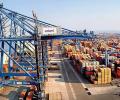
State-owned Life Insurance Corporation (LIC) on Thursday entirely subscribed to the Rs 5,000 crore bond issue of Adani Ports and Special Economic Zone (APSEZ) at a coupon rate of 7.75 per cent, said sources privy to the development.

The delegation led by Qasemi arrived on Sunday with the aim of persuading New Delhi to step up both oil imports and investment in the OPEC-member's oil and gas sector.

Dilip Doshi, who passed away on June 23, was celebrated not only as one of India's finest left-arm spinners but also as a cricketer of rare character and amazing qualities, recalls veteran cricket correspondent K R Nayar.

This might help explain why our global outreach has received such a tepid response. We have chosen to be transactional with the world, as our UN votes reveal, points out Aakar Patel.

However, copious oil supplies amid growing global output and slowing Chinese oil consumption will put India in a better bargaining position with Gulf suppliers.
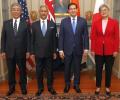
The Quad grouping has called for bringing the perpetrators, organisers and financiers of the Pahalgam terror attack to justice without any delay and urged UN member nations to extend cooperation for it.

Indian imports of Russian oil plunged by a record in August month-on-month (M-o-M) as discounts on the fuel shrank in tandem with rising Brent oil prices. Higher crude prices will drive inflation or hurt earnings at oil companies and India's fiscal position if such spikes are not passed on to consumers. Indian purchases of Russian crude declined by around 24 per cent in August from July to the lowest level since January, with refiners expecting volumes to drop further amid rising rates of Russian benchmark Urals grade, substantial stocks at refiners, and planned maintenance at Indian refineries, according to ship tracking data and industry officials.

There is nothing, when it comes to clothes, that Sonam cannot wear well. Nor are there fashion rules that she won't break if need be.

Currently in its advanced development phase, the team is focusing on refining the robot's ability to understand and execute operator commands.

Gold import from the UAE at a lower rate of duty -- in terms of an agreement -- has posed a survival challenge for the Indian refining industry while hurting the price discovery of the metal, with the India International Bullion Exchange starting operations at GIFT City. The problem has arisen after the government signed the Comprehensive Economic Partnership Agreement (CEPA) with the UAE. Under it, Indian jewellery manufacturers have been allowed to import gold at a concessional rate of 14 per cent against 15 per cent, which is normal.
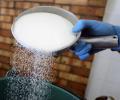
The Central Board of Secondary Education (CBSE) has directed schools to set up dedicated 'Sugar Boards' to raise awareness about sugar consumption and combat childhood obesity. Experts hail the initiative as a significant step towards promoting healthier dietary habits among students and families. The boards will display information on the sugar content in common snacks, drinks, and meals, helping children make informed choices. This move comes as data reveals alarmingly high sugar intake among Indian children, exceeding the World Health Organization's recommended limits.

The wide-ranging sanctions imposed by the US on the Russian oil sector have started to dent near-term oil flows to India with state-owned Bharat Petroleum Corporation Ltd (BPCL) saying not enough cargoes are available for March.
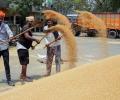
ISRO has projected wheat production of 122.24 million tonnes.

After a much-needed two-day respite, Team India returned to the training grounds with renewed vigour, setting their sights on a pivotal showdown against New Zealand on Sunday.

'...hesitate to support the risk-taking it requires.'

The latest flashpoint in West Asia has derailed India's preliminary plans to resume crude oil imports from Iran, officials said. In January, officials of the Ministry of Petroleum and Natural Gas had told Business Standard that the government had been studying proposals for the same, given that India was trying to expand sources of imports. "We are always monitoring the situation when it comes to crude flows.

Global oil prices have slumped and India has access to larger amounts of discounted Russian crude oil, yet refiners are not passing on their savings to consumers

From Joe Root vs Jasprit Bumrah's high-stakes chess match to the all-round brilliance of Ben Stokes vs Ravindra Jadeja, and from emerging face-offs like Shubman Gill vs Shoaib Bashir to K L Rahul's test against Chris Woakes, each duel carries weight far beyond statistics.

Russian oil supplies to India will continue to flow unhindered and suppliers will come up with ways to sidestep secondary sanctions, a Russian official told Business Standard.
Trends in the global energy markets are crucial if India's growth outlook is to remain healthy. Prices for the Indian crude basket were averaging around $86.2 per barrel through Q1FY25 and then moderated to $84 in July and to $78-79 in August (so far). But global crude supply may outpace weak global demand in the short term.
After HPCL, the government headhunter struggled to find a suitable candidate for the top job at Bharat Petroleum, as most applicants were narrow specialists lacking multidisciplinary experience needed to run a large organisation. The Public Enterprise Selection Board (PESB) last month interviewed a dozen candidates including BPCL director (finance) Vetsa Ramakrishna Gupta and its director (refineries) S Khanna but found none suitable for the job of chairman and managing director of Bharat Petroleum Corporation Ltd (BPCL), according to a PESB order.

Oil marketing companies (OMCs), paint manufacturers, tyre producers, and aviation stocks witnessed significant gains as Brent crude oil prices slipped below $70 per barrel. The price drop came after a double blow: The US imposed tariffs on Canada and Mexico, including energy imports, and OPEC+ - the group of major oil-producing nations including Russia - announced an output increase of 138,000 barrels per day, the first such hike since 2022.

State-run Indian Oil Corporation (IOCL) reported a weak performance in the fourth quarter of FY24 (January-March 2024), and the turmoil in the energy market indicates it could endure another lacklustre quarter. The oil marketing company (OMC) reported an Ebitda of Rs 10,400 crore, down 27 per cent year-on-year (Y-o-Y) due to weak reported gross refining margin (GRM) of $8.4 per barrel in Q4FY24, which was almost half the consensus expectation of $15 per barrel.
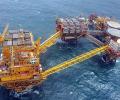
ONGC's overseas arm applied for a sanctions waiver to access $500 million dividend from two Venezuelan projects.

Raina also laid emphasis on how Kuldeep Yadav could be a lynchpin in India's success.

India is preoccupied with analysing the US sanctions, which may cut off India's access to discounted Russian crude and force it to buy at market prices.

10 analysts estimated RIL's consolidated net profit at Rs 11,256 crore and nine analysts estimated revenue at Rs 1.5 trillion.

'Pakistan cannot sustain a war with India for more than four days. They are in such dire straits. At best they can sustain war for one week.'

'Making sure that you're getting enough sleep, that your weight is maintained correctly and you exercise regularly.'

Career counsellor Nayagam PP suggests 20 powerful steps you can take while balancing your board exams and other engineering entrance tests.

Delhi Capitals opener Shafali Verma has credited the Women's Premier League (WPL) for helping her learn how to build her innings.

Fitch Ratings has removed energy infrastructure company Adani Energy Solutions Ltd (AESL) from its 'Ratings Watch Negative' list, the first upgrade by an international ratings agency since the US indictment. Fitch affirmed AESL long-term foreign and local-currency issuer default ratings (IDRs) at 'BBB-'.
Fitch Ratings on Monday said India's steady GDP growth outlook, improved banking sector's financial health and expected interest-rate cuts in 2025 will support credit access for corporates in FY26.

'The time has come to have a relook at the Constitution as every document has a shelf life.'
